Background
Bohol Diocesan School operates three separate campuses across Tagbilaran — a main high school campus, a grade school building, and an administration and community center — each with its own Meralco account, its own billing cycle, and its own energy footprint.
Facilities Director Joseph Tan had been managing three sets of electricity bills for years, with no way to see consumption patterns across campuses, no shared baseline for comparison, and no leverage to negotiate as a larger account. Budget planning was essentially guesswork: “We’d look at last year’s bills and add a buffer. We had no real visibility into what was driving the numbers.”
The Challenge
The problem wasn’t simply cost — it was opacity. Three separate accounts with a combined monthly spend of approximately ₱220,000 were being managed in isolation. When one campus’s bill spiked, it was difficult to know whether it reflected actual increased usage, a billing error, or a rate change. There was no way to compare consumption efficiency across buildings, or to identify which campus offered the most improvement opportunity.
For a school operating on a fixed institutional budget, the inability to forecast energy costs accurately created real financial planning problems. Tan estimates that energy cost variance accounted for up to 15% of annual budget uncertainty.
The SunShare Solution
SunShare unified all three campus accounts under a single aggregated arrangement, allowing Bohol Diocesan to negotiate as a combined commercial account with significantly greater purchasing weight.
The solution had two components:
Aggregated supply — All three campuses now draw from a single negotiated generation rate. The combined 380,000 kWh monthly consumption across all sites represents a much more attractive account for wholesale generators than any individual campus alone.
Unified dashboard — Tan and the administrative team can now see real-time consumption across all three campuses from a single interface: daily usage curves, per-campus comparisons, anomaly alerts, and month-over-month trends. The dashboard generates a monthly budget report automatically.
“We now know, by the 5th of the month, what our full energy spend looks like — and whether anything unusual happened,” says Tan. “That’s completely new for us.”
Results
In the first six months of operation:
- Combined monthly bill reduced by an average of 18% across all three campuses
- Energy budget variance reduced from ±15% to ±4%
- Tan’s team identified two consumption anomalies (an HVAC unit running after hours, and a faulty metering reading on the admin building) that would have gone unnoticed under the previous arrangement
- Projected annual savings of ₱1.2M across the full contract term
The anomaly detection alone — a byproduct of having real visibility for the first time — is estimated to have saved the school ₱180,000 in the first year.
What’s Next
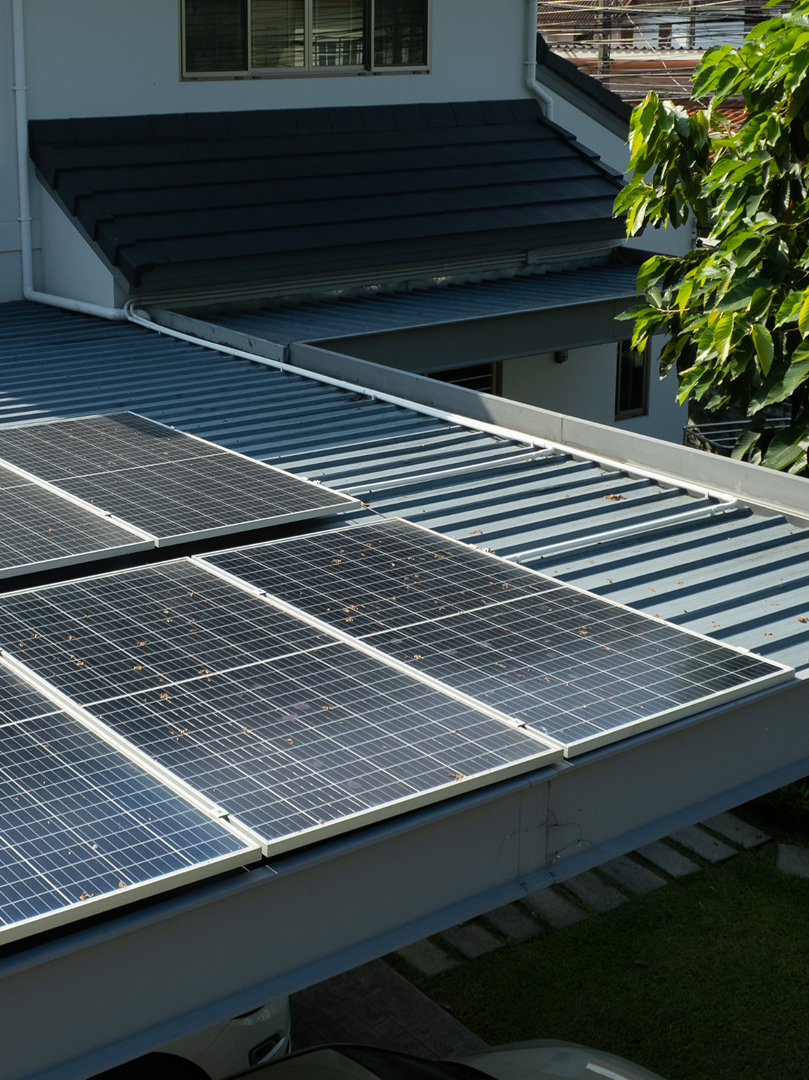
The school is evaluating solar for the main campus roofline, which Tan estimates could support a 25–30 kW installation covering approximately 40% of that campus’s daytime load. Under SunShare’s Phase II model, the generation would be credited across all three campus accounts proportionally.
“We didn’t join for the solar roadmap,” Tan notes. “We joined for the visibility. But now that we have the data, the solar numbers are starting to make sense.”